
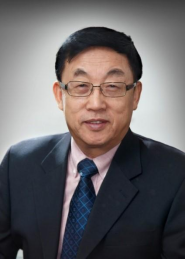
 | Prof. Tianyou Chai, Academician of the Chinese Academy of Engineering, Northeastern UniversityIntroduction: Tianyou Chai, an academician of the Chinese Academy of Engineering, an expert in control theory and control engineering, an IEEE Life Fellow, and an IFAC Fellow. He served as a member of the Technical Bureau of the International Federation of Automatic Control (IFAC) and the Chairperson of the IFAC Committee for Manufacturing and Instrumentation Technology (1996-1999), the Director of the Information Science Department of the National Natural Science Foundation of China (2010-2018), and the Editor-in-Chief of the "Journal of Automatic Control". Currently, he is the Director of the Academic Committee of Northeastern University (2011-), the Director of the National Key Laboratory of Integrated Automation for Process Industry, and the Director of the National Engineering Research Center for Metallurgical Automation. He has been engaged in research on control of complex industrial processes, optimization and comprehensive automation and intelligence, as well as integrated industrial intelligent systems based on new-generation information technologies. He proposed the multi-variable adaptive decoupling control theory and methods, and established the theory and methods for multi-objective dynamic optimization decision-making and control integration throughout the production process. He led the research and development of intelligent decoupling control technology and systems, intelligent operation feedback control technology and systems, production process-wide intelligent optimization control technology and systems, and comprehensive automation and intelligence systems, and successfully applied them, achieving significant social and economic benefits.He has published a total of over 300 papers in IFAC journals and IEEE journals. Among them, one paper won the Best Paper Award of the top international journal IFAC Journal Control Engineering Practice from 2011 to 2013. He has also trained over 100 doctoral students and 260 master's students. He has given more than 30 invited keynote speeches at IFAC and IEEE international conferences held in countries such as the United States, the United Kingdom, Canada, and Japan. As the first author, he has won five National Natural Science Awards, two National Technology Invention Awards, and two National Science and Technology Progress Awards. He has also received thirteen provincial and ministerial-level special awards and first prizes. He was awarded the National May Day Labor Medal, the 2002 Liang Li Award of the Hong Li Foundation for Science and Technology Progress, the 2003 Liaoning Science and Technology Merit Award, the 2005 National Advanced Worker Honorary Title, and the 2010 First Prize of the Yang Jiachi Science and Technology Award. In 2007, he was awarded the Outstanding Industrial Achievement Award in Control Research at the IEEE Systems and Control Joint Conference. In 2017, he received the Wook Hyun Kwon Education Award of the Asian Control Association. Title: Industrial intelligent systems based on the latest generation of information technology |
Prof. Quan Wang, Principal, Academician, Shantou UniversityIntroduction: Wang Quan is currently the Executive President of Shantou University. In 2015, he was elected as a Fellow of the Canadian Academy of Engineering. In 2016, he was elected as a Fellow of the Royal Society of Canada. In 2018, he was elected as a Fellow of the European Academy of Sciences. In 2019, he was elected as a Fellow of the European Academy of Sciences and was awarded the Blaise Pascal Medal of the European Academy. Currently, he is a fellow of several international professional associations such as the Institute of Physics of the United Kingdom, the American Society of Mechanical Engineers, and the American Society of Civil Engineers. He is also a director of the Chinese Society of Vibration Engineering. He also serves as the editor-in-chief and associate editor of several internationally renowned journals. Currently, he has been invited to serve as the associate editor of the International Journal of Mechanical Science. He has been engaged in cutting-edge scientific research in the field of engineering structures and materials for a long time. In the field of engineering structure health monitoring, he has developed and introduced new technologies and original methods for the health monitoring of aerospace engines, large machinery, and bridges. By using intelligent materials and engineering structure design, he has promoted the research and development of green energy and intelligent materials. He has established an effective connection between the continuous mechanics principle and nanoscale problems, solving the limitations of traditional continuum mechanics applied to nanomaterials. | 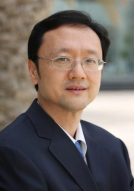 |
 | Prof. Qingguo Wang, Wuhan University of Science and TechnologyIntroduction: Professor Wang Qingguo is a government-distinguished expert of China, a Fellow of the Academy of Science of South Africa, and a South African National A1-rated scientist. He currently holds the position of Distinguished Professor at the School of Mechanical Engineering, Wuhan University of Science and Technology. He received his Ph.D. degree in Industrial Automation from Zhejiang University in 1987, where he was also awarded the title of “Outstanding Graduate.” He has previously served as a Full Professor in the Department of Electrical and Computer Engineering at the National University of Singapore, Distinguished Professor at the Institute for Intelligent Systems, University of Johannesburg, South Africa, Chair Professor at BNU-HKBU United International College, and Professor at the School of Artificial Intelligence and Future Networks, Beijing Normal University. His academic expertise lies in automation and artificial intelligence, with research focusing on modeling, estimation, prediction, optimization, and control of complex systems. He has published over 500 papers in international journals and authored 7 academic monographs published by Springer. His cumulative work has received over 23,000 citations, with an H-index of 85. He received the Most Cited Paper Award (2006–2010) from the prestigious international control journal *Automatica*, was named on the Thomson Reuters list of highly cited researchers in 2013, received the Most Influential Paper Award from *Control Theory & Applications* on the occasion of its 30th anniversary in 2014, and has been recognized as a Highly Ranked Scholar – Lifetime in both Control Theory and PID Controllers, placing in the top 0.05% of global scholars in these fields according to ScholarGPS. He also ranks among the top 2% of scientists worldwide in both the “career-long scientific impact” and “annual scientific impact” categories (top one-fifth) as published by Stanford University, and is listed among the world’s top electronics and electrical engineering scientists by Research.com. He has served as Chair of the IEEE Control Systems Chapter, Singapore Section (four times), General Chair of the Asian Control Conference and several IEEE international conferences. He is currently serving as Deputy Editor-in-Chief of the internationally renowned journal *ISA Transactions*. He has supervised approximately 40 Ph.D. students and 30 postdoctoral fellows. Title: i-Enterprise: Total Manufacturing Automation through Intelligent Dynamic Integration of Production Control and Management |
Prof. Furong Gao,The Hong Kong University of Science and Technology, HKUSTIntroduction: Gao Furong, Ph.D., is a lecture professor at the Hong Kong University of Science and Technology, director of the Polymer Molding and Systems Center at the University, a member of the National "Thousand Talents Program", a Fellow of the Society of Plastic Engineers (SPE), founding chairman of the SPE Process Monitoring and Control Branch, chairman of the Advanced Molding Technology Association, deputy director of the Process Control Committee of the China Automation Society, deputy director of the Intelligent Factory Committee of the China Instrumentation Society, and vice chairman of the Guangdong Automation Society. Engaged in long-term research on batch process modeling, control, monitoring, optimization, opto mechatronics integration, and their applications in plastic processing and energy fields. Hosted and undertaken over 100 scientific research projects (National Natural Science Foundation of China Key Project, Scientific Instrument Special Project, Ministry of Science and Technology Key Project, Guangdong Innovation Team Project, Hong Kong RGC, Hong Kong ITS, etc.), delivered over 100 conference reports and keynote speeches both domestically and internationally, published 7 monographs and over 650 scientific papers, and applied for over 90 domestic and international patents. He has won more than ten international conferences and journal paper awards, and has served as an editor and editorial board member for multiple international journals in the field of polymer processing and automation. Title: Batch Process Automation and Open Platform Toward Smart Manufacturing | 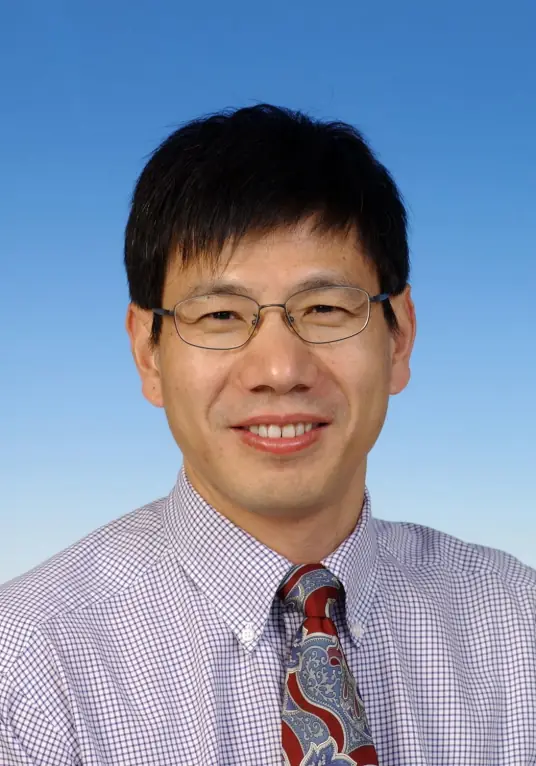 |
 | Prof. Jianmin Jiang, Shenzhen UniversityIntroduction: Professor Jianmin Jiang was selected in 2010 as a distinguished expert under the third batch of China's National Thousand Talents Plan and joined Tianjin University as a specially appointed professor and academic leader of the Computer Graphics and Image Research Center. In 2014, he moved full-time to Shenzhen University, where he founded the Institute of Future Media and Computing (http://futuremedia.szu.edu.cn) and has since served as a specially appointed professor and the director of the institute. He received his Ph.D. degree from the University of Nottingham, UK, in 1994, and in the same year became a Lecturer in the Department of Computer Science at Loughborough University, UK. In 1997, he was appointed Full Professor at the School of Computing, University of Glamorgan, UK — just over three years after receiving his Ph.D. — making him one of the first mainland Chinese scholars to become a full professor at a UK university. In 2002, he became Chair Professor of Digital Media at the University of Bradford, UK, and Director of its Institute of Digital Media and Systems. He also served as Chair Professor in Media Computing in the Department of Computer Science at the University of Surrey, UK. He has received over 30 research grants from UK national funding bodies and the European Framework Programmes, with total research funding exceeding €25 million. He has extensive experience leading large-scale collaborative research projects involving institutions from multiple countries. Notably, he coordinated the EU-China project SCC-Computing under the Seventh Framework Programme (FP7), which had significant impact both domestically and internationally. Partners in this project included the University of Surrey (UK), the Bulgarian Academy of Sciences, the University of Zaragoza (Spain), the University of Stavanger (Norway), the University of Della Svizzera Italiana (Switzerland), as well as the Tianjin Supercomputing Center and Tianjin University (China). In addition, he was awarded the Overseas Outstanding Youth (Category B) grant by the National Natural Science Foundation of China (NSFC) in 2000. In 2002, he was elected Fellow of the IEE (now IET) and also became a Fellow of the Royal Society of Arts (UK). He has published nearly 400 English-language academic papers in the field of computer science. In 2025, he was listed on the World's Top 2% Scientists "Career-long Scientific Impact" ranking. He has also led multiple national-level research projects, with representative grants including: (i) NSFC Key International Collaboration Project: "International collaboration on reconstruction theories and algorithms for indoor scenes from 3D multi-view panoramic video," 2017–2021, RMB 2.55 million, involving Shenzhen University, Nankai University, University of Oxford, and University of Surrey; (ii) NSFC Key Project: "Deep analysis and visual presentation of imagined multimedia," 2021–2025, RMB 2.83 million, with Shenzhen University as the sole host institution; (iii) NSFC Key International Collaboration Project: "Brain-seek: deep analysis of brain-perceived semantics from random EEG data driven by large models," 2025–2027, RMB 2.6 million, with Shenzhen University as the sole host institution and Egypt-Japan University of Science and Technology as the international partner. Title: Deep Analysis and Visual Presentation of Imagined Multimedia |